
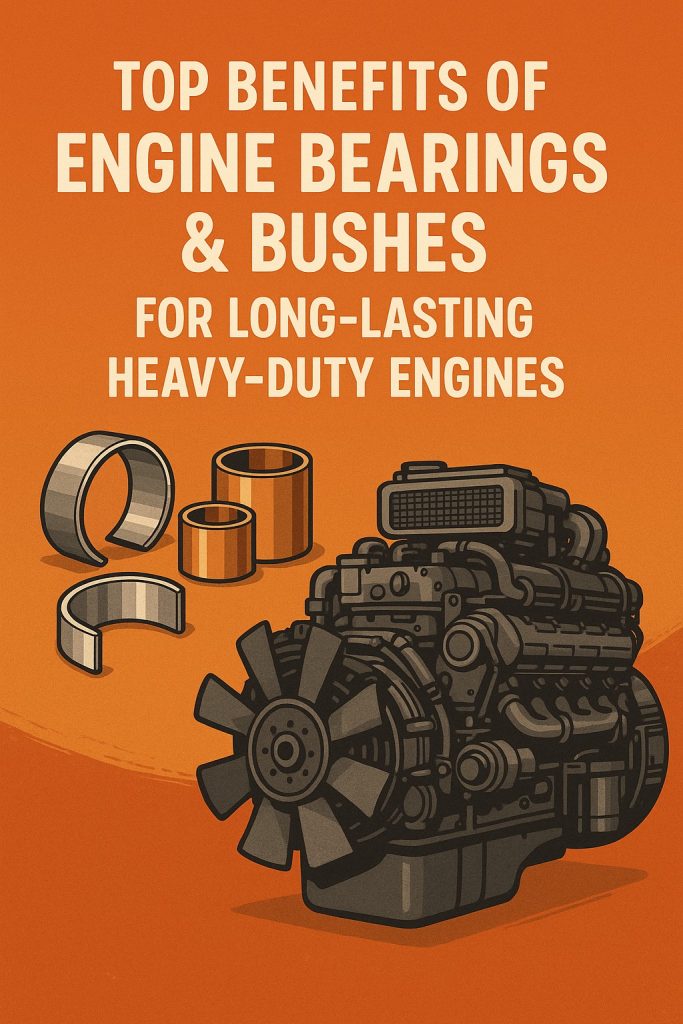
Introduction to Engine Bearings & Bushes
In any heavy-duty engine—whether powering a truck, locomotive, or marine vessel—Engine Bearings & Bushes are among the most critical components. Often unnoticed, these parts ensure smooth movement, reduce wear, and ultimately extend the lifespan of an engine. Without them, friction between moving parts would lead to catastrophic failure.
Types of Bearings & Bushes
Heavy-duty engines use several types of bearings and bushes, including:
🔩 Engine Bearings
- Main Bearings – Support the crankshaft rotation.
- Rod Bearings – Positioned between connecting rods and crankshaft.
- Thrust Bearings – Manage axial loads and prevent engine shifting.
- Camshaft Bearings – Guide camshaft movement.
🔧 Engine Bushes
- Plain Bushes – Common in pivot points and suspension.
- Flanged Bushes – Used in high axial load applications.
- Split Bushes – Easy maintenance for larger assemblies.
How Engine Bearings & Bushes Extend Engine Life
Here’s how they help improve engine performance and longevity:
✅ Reduce Friction: Create a low-resistance surface between moving parts.
✅ Dampen Vibrations: Absorb mechanical shocks during operation.
✅ Support Rotating Elements: Keep crankshafts and camshafts properly aligned.
✅ Prevent Overheating: Disperse heat generated from high-speed motion.
✅ Minimize Wear & Tear: Reduce metal-to-metal contact.
Materials Used in Engine Bearings & Bushes
Material quality directly impacts engine durability. Commonly used alloys include:
| Material Type | Application | Benefits |
| Copper-Lead | Main bearings | High load capacity |
| Aluminum Alloys | Rod bearings | Lightweight, cost-effective |
| Bronze | Bushes | Excellent durability |
| Bi-metal/tri-metal | Combo use | Best of strength and flexibility |
Where Are These Parts Used?
🚛 Heavy Trucks: Essential for crankshaft and camshaft support.
🚂 Locomotives: High-load bearing areas in ALCO and EMD engines.
🚜 Agricultural Machinery: Bearings support continuous field use.
🚢 Marine Engines: Bushes are critical for withstanding corrosion and load.
Signs Your Bearings or Bushes Need Replacement
Be on the lookout for:
🔧 Knocking or rumbling engine noise
🛢️ Drop in oil pressure
🔥 Overheating engine
💀 Metal shavings in oil
⚙️ Crankshaft misalignment
Maintenance & Inspection Tips
- Always follow OEM-recommended lubrication schedules.
- Replace worn bearings and bushes before complete failure.
- Conduct periodic inspections during major servicing intervals.
- Keep filters and oil clean—debris accelerates wear.
Why Mikura International?
At Mikura Engine Parts, we deliver precision-manufactured bearings and bushes that meet or exceed OEM standards. Trusted in over 20+ countries, our products serve critical sectors like:
- EMD & ALCO locomotive engines
- SCANIA & MAN trucks
- Marine and agricultural engines
🔗 Learn more about our Bearings & Bushes offerings
FAQs
Q1: What’s the lifespan of engine bearings?
A1: Typically 100,000–150,000 km, but it depends on maintenance and load.
Q2: Can you drive with a worn engine bush?
A2: It’s risky. It may lead to vibration and premature engine failure.
Q3: Are OEM bearings better than aftermarket ones?
A3: Yes. Mikura offers OEM-quality parts for maximum reliability.
Q4: How do I know if my bushings are bad?
A4: Clunking sounds and steering issues are major signs.
Q5: What causes premature bearing wear?
A5: Contaminated oil, overloading, poor installation.
Q6: Where does Mikura source its raw materials?
A6: We work with certified suppliers ensuring high-grade alloys.
Conclusion
Investing in high-quality engine bearings & bushes is non-negotiable for anyone operating heavy-duty equipment. They’re small parts with a huge impact—preventing wear, reducing friction, and ensuring your engines run reliably. With Mikura International, you get guaranteed quality, expert sourcing, and global delivery.